Keeping Your Dog Safe at Home: Fencing, GPS Collars, AirTags, and Microchipping
June 30, 2026
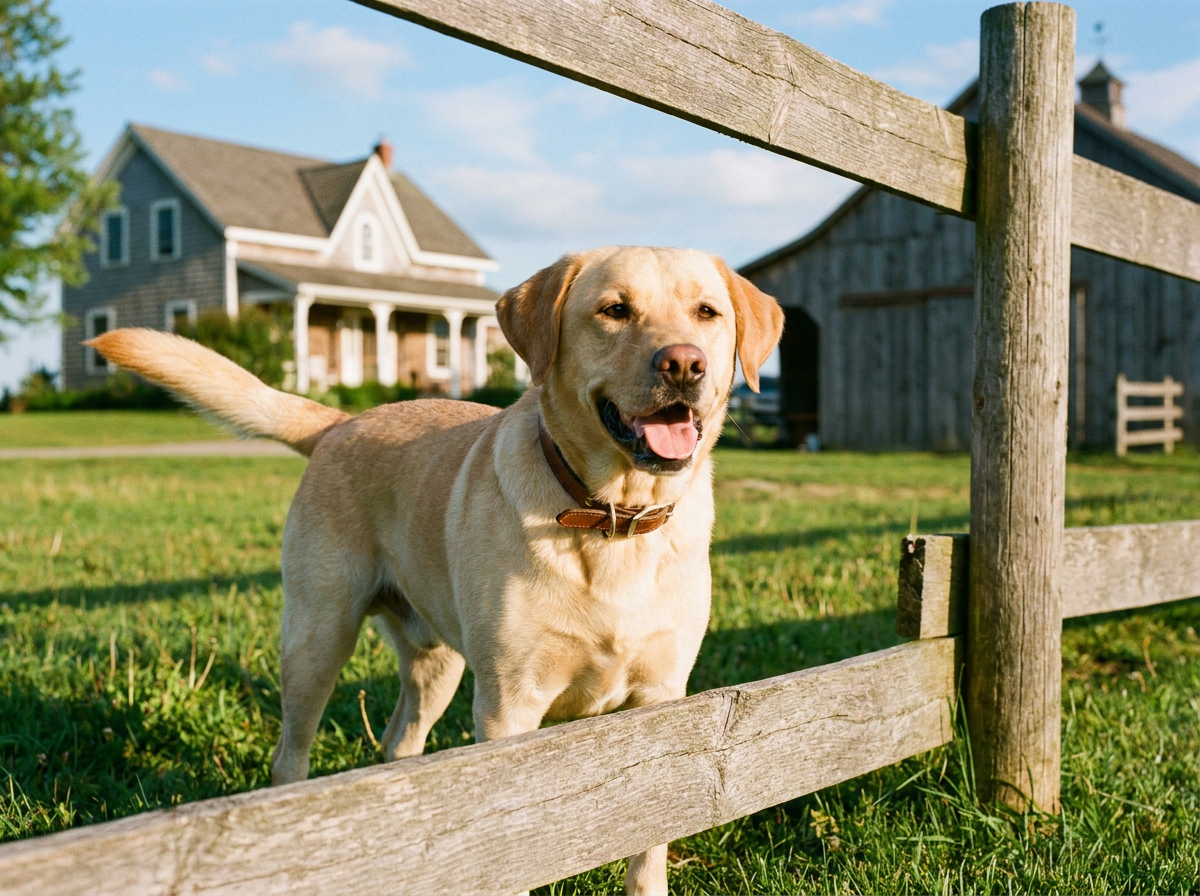
If your dog means everything to your family — and we know they do — then a little planning goes a long way toward making sure they stay safe. Here's a practical breakdown of your best options.
Fencing: Your First Line of Defense
A good fence is still the gold standard for keeping your dog where they belong.
Traditional Wood or Chain-Link Fencing
Solid, visible, and effective. Labs are athletic, so height matters — 5 to 6 feet is recommended for most adult labs. Check for gaps at ground level regularly, especially after frost heave or heavy rain shifts the ground.
Invisible / Underground Electric Fencing
Electric fencing uses a buried wire and a receiver collar to create a boundary your dog learns to respect. It can be a good solution for large properties or areas where traditional fencing isn't practical.
The tradeoff: it keeps your dog in, but it doesn't keep other animals or people out. A highly motivated or frightened dog can also blow through the boundary. It works best as a supplement to other safety measures, not a standalone solution. Labs — being smart and food-motivated — often do well with proper training on this system.
What to Look For in Any Fence
- No gaps wider than a few inches at the bottom
- Gates that latch securely (spring-loaded latches are worth it)
- No objects near the fence your dog could use as a step stool
GPS Collars: Real-Time Peace of Mind
GPS dog collars have come a long way and are genuinely worth the investment — especially if your dog goes off-leash in the field, on your property, or anywhere with open land.
How They Work
GPS collars connect to cellular or satellite networks and send your dog's location to an app on your phone in near real-time. Most update every few seconds to every minute.
Popular Options
- Fi Series 3 — Well-reviewed, long battery life (up to a month on a charge), lightweight, and durable. Works anywhere there's cellular coverage.
- Whistle Go Explore — Tracks location and also monitors activity and sleep. Good for dogs that are both pets and working dogs.
- Tractive GPS — Subscription-based, works internationally, good map features.
GPS collars require a monthly subscription (typically $10–$15/month) and depend on cellular coverage. In very remote areas, coverage can be spotty — something to keep in mind in rural Minnesota.
Apple AirTags: Helpful, But Not a Replacement
You've probably heard of people putting Apple AirTags on their dogs' collars. They're inexpensive and easy to use — but it's important to understand what they can't do.
AirTags don't have GPS. They work by using the Bluetooth network of other Apple devices nearby to ping their location back to you. In a city or suburb, that works reasonably well because Apple devices are everywhere. In rural areas — like most of central Minnesota — there may be very few Apple devices around, meaning your AirTag could go silent for hours.
They're better than nothing as a backup, but for a working lab on a rural property, a GPS collar is a much stronger option.
Microchipping: The One Thing Every Dog Should Have
A microchip is a tiny transponder (about the size of a grain of rice) implanted under your dog's skin, usually between the shoulder blades. It takes seconds, costs around $25–$50 at most vet clinics, and lasts your dog's lifetime.
Why It Matters
When a lost dog is brought to a shelter or vet clinic, one of the first things they do is scan for a chip. If your dog has one and the registration is current, you get a call. Without a chip, a lost dog becomes a stray with no direct link back to you.
Registration Is the Key Step People Miss
The chip itself doesn't do anything if it isn't registered. Make sure your chip is registered in a national database like Found Animals Registry (free) or PetLink. If you move or change your phone number, update it.
Microchip vs. ID Tag
Both. Always both. A tag is visible and immediate — anyone who finds your dog can call you right away. A chip is permanent and can't fall off or fade. They work together.
Our Take at Hillcrest Farm
We recommend microchipping your pup as soon as your vet recommends it, putting a current ID tag on their collar the day they come home, and investing in a GPS collar if your dog will spend time off-leash — whether in the field or just in a big yard. A fence is wonderful, but dogs are creative. Layering your safety measures gives you the best shot at keeping your dog home where they belong. 🐾