
Labs and Water: Building Confidence in the Creek, Pond, and Beyond
July 7, 2026
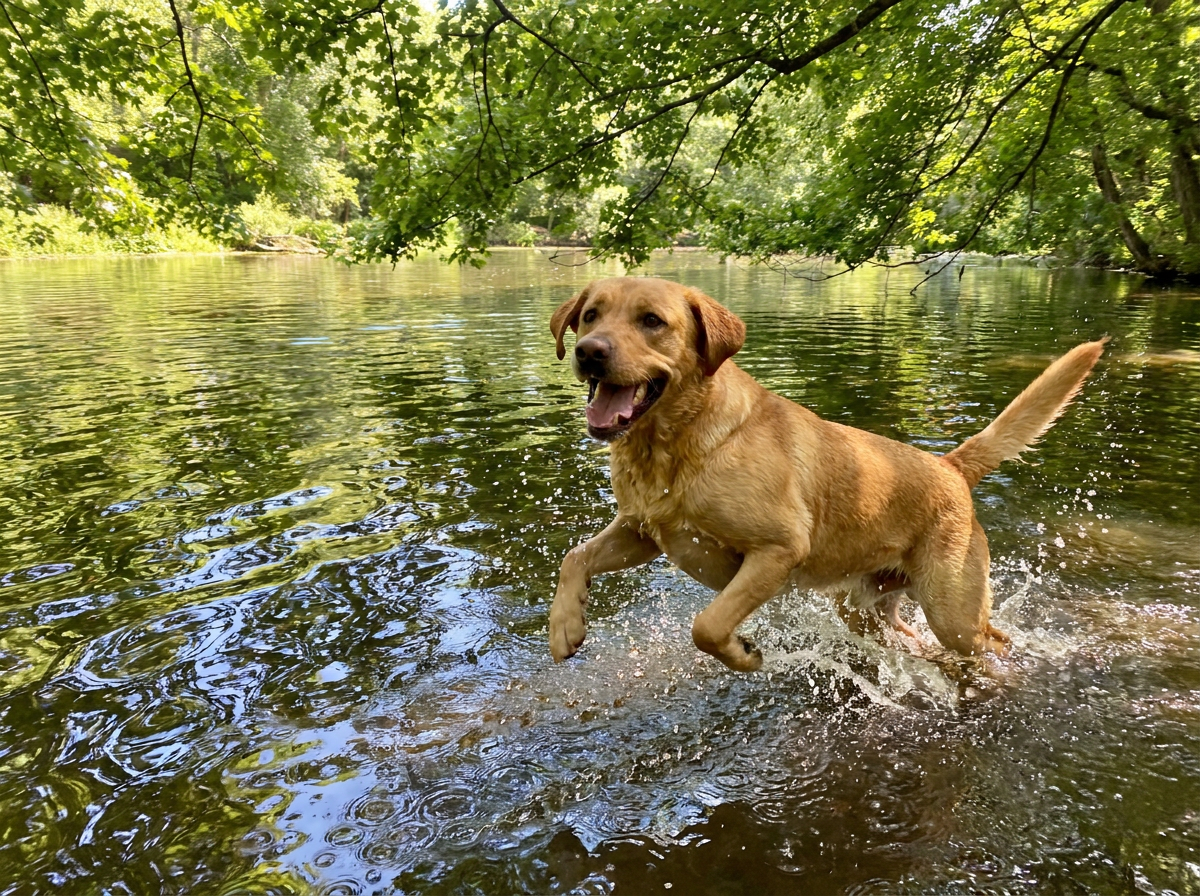
Ask most people what they know about Labrador Retrievers and water will probably come up in the first sentence. Labs and water just go together — it's practically part of the breed description. But here's something a lot of new lab owners are surprised to discover: not every lab is born diving in headfirst.
Some take right to it. Others need a little encouragement, a good example, and the right introduction. The good news? Once a lab decides water is their thing, there's no going back. 🐾
Why Labs Are Built for Water
Labs have a double coat — a dense, water-resistant outer layer and a soft insulating undercoat — that sheds water beautifully. Their broad tail acts like a rudder. Their webbed feet make them efficient swimmers. They were literally bred to retrieve waterfowl in cold Canadian waters.
But breeding and instinct only go so far. Early positive exposure is what turns a lab with water potential into a lab who can't be kept out of the pond.
Step-by-Step: Building Water Confidence
Start with Puddles
Seriously — puddles. After a rain, let your pup investigate standing water on their own terms. Don't push them in, don't coax them, just let curiosity do the work. Praise and reward when they step in.
Move to Creek Edges and Shallow Shorelines
Find a spot where the water gradually gets deeper — no steep drops, no fast current. Let your dog wade in at their own pace. Toss a stick or toy just a foot or two out so they can grab it without fully committing to swimming. Keep it positive, keep it short.
A confident older dog who loves water is your best recruiting tool here. Dogs learn from each other. If you have a friend with a water-loving dog, a joint swim session can do more than a week of solo work.
Build to Swimming Depth
Once they're comfortable wading chest-deep, throw a retrieve just far enough that they have to swim a stroke or two to get it. The first time they lose their footing and realize they're actually swimming — watch that expression. Most labs have a moment of “wait, this is GREAT” and they're hooked from there.
Open Water and Pond Retrieves
Once swimming clicks, you can start building distance and adding retrieves from boats, docks, or the far bank. For hunting dogs, this is where you transition to bird wings, frozen dummies, and eventually the real thing.
Safety First
- Never throw a dog into water — ever. Force backfires and creates long-lasting fear
- Avoid fast-moving rivers and strong currents until your dog is a confident swimmer
- Watch for blue-green algae in ponds during summer — it can be toxic
- Rinse your dog after lake or pond swims to prevent ear infections
- Know where your dog can exit the water before they get in — steep banks and slippery rocks are hazards
At Hillcrest Farm
We're lucky to have a swim-by creek and ponds right here on the property — so our dogs grow up with water as just part of life. By the time our pups go home, most have already had their feet wet (literally). Summer is the perfect time to keep building on that foundation. Get them to the water. Let them discover it for themselves. You'll have a very happy, very wet lab for life. 🐾