
Why We Use E-Collars (And How We Use Them Responsibly)
July 14, 2026
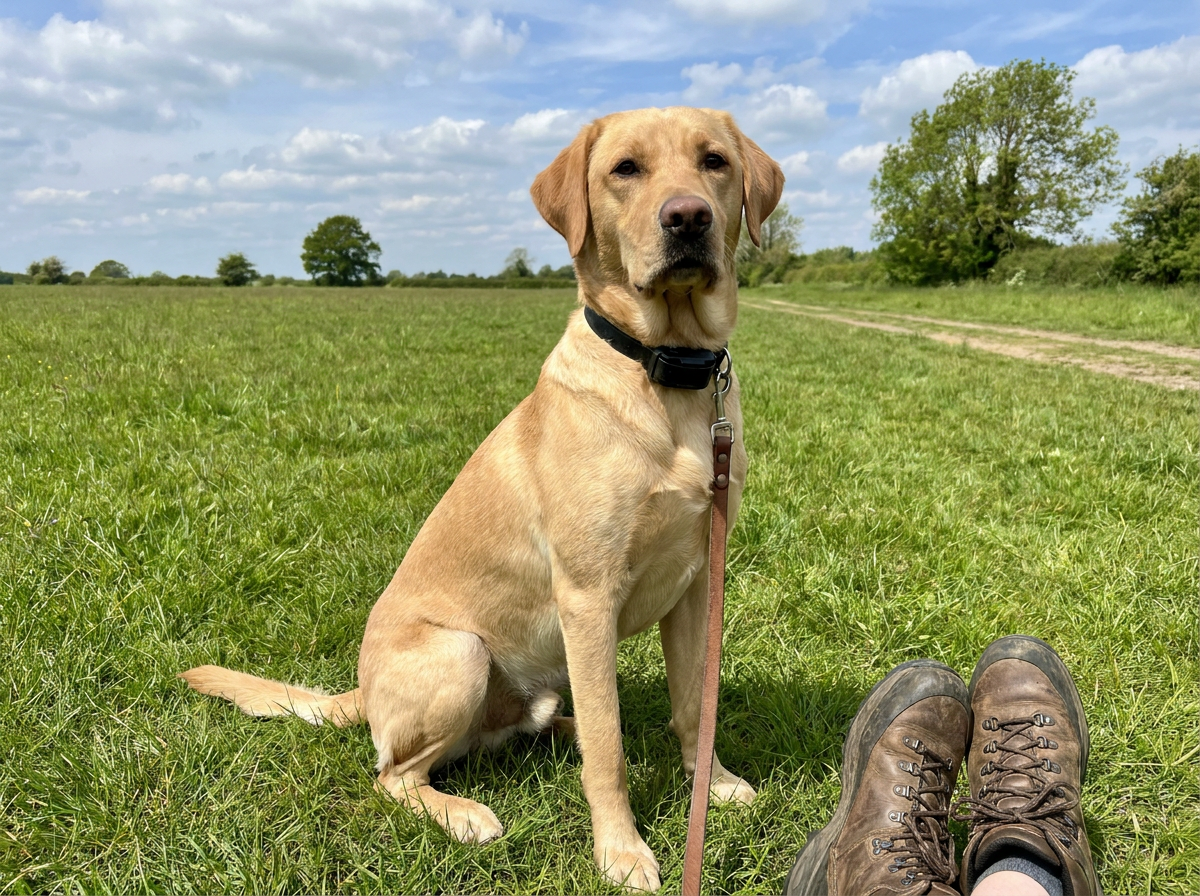
Let's talk about something that comes up a lot — and that I want to be completely transparent about. We use e-collars in our training program at Hillcrest Farm. And I know that word makes some people nervous. So let me explain exactly what that means, how we use them, and why I believe — when done right — they're one of the most humane tools in a trainer's toolkit.
First: What an E-Collar Actually Is
An e-collar (electronic collar) delivers a mild, adjustable stimulation to the dog's neck via two contact points. Modern e-collars have a wide range of levels — most working dogs are trained at levels that their owners can barely feel when pressed against their own skin. The goal is not to shock or scare. It's to communicate — like a tap on the shoulder that says “hey, pay attention.”
Used correctly, it's not a punishment device. It's a communication tool that works off-leash at any distance. That distinction matters a lot.
Our Blended Training Approach
At Hillcrest Farm, we use a blended method — positive reinforcement, clicker training, and e-collar work together. We never skip straight to the e-collar. Every dog starts with positive reinforcement to build understanding and trust. The e-collar comes in only after a dog fully understands a command and we're working toward reliability and off-leash response.
Think of it this way: you teach with treats and praise, then you proof with the e-collar. A dog that understands “come” perfectly in the backyard but blows you off when a deer runs by — that's a dog that needs the reliability piece. For a hunting dog working 200 yards out in heavy cover, that reliability can be the difference between a safe retrieve and a lost dog.
How We Introduce It
- We always start at the lowest effective level — finding the dog's “working level” before any training begins
- The collar is conditioned as a neutral tool before it's ever used in training (worn without stimulation so the dog isn't stressed by putting it on)
- We pair the stimulation with known cues the dog already understands — never using it for something new
- We never use stimulation in frustration or anger — ever
- The goal is always the dog's success, not compliance through fear
Who It's Right For
Not every dog needs e-collar training — and we're honest about that. For a family companion who'll always be on a leash or in a fenced yard, you may never need one. But for:
- Hunting dogs working off-leash in the field
- Dogs with strong prey drive who need reliable recall around wildlife
- Board & Train clients working toward real off-leash freedom
- Dogs that have hit a ceiling with positive-only training and need a clearer communication system
...an e-collar, used properly, can be genuinely life-changing. It gives the dog more freedom — because a dog you can trust off-leash lives a fuller life than a dog that always has to be tethered.
The Bottom Line
I'm not here to tell you every dog needs an e-collar or that it's the only way. It's one tool — a powerful one when used correctly — in a larger toolbox. What I care about is the dog's wellbeing, the owner's confidence, and a relationship built on trust and clear communication. If you have questions about whether it's right for your dog, reach out. I'm always happy to talk through it honestly. 🐾